
 Mar 27,2026
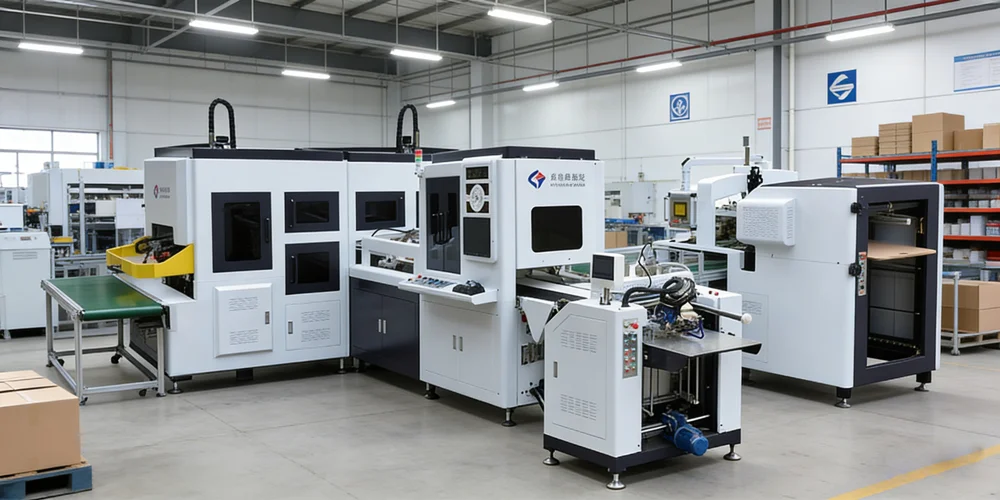
If you are reading this, you are likely staring down a significant capital expenditure decision. You need the answer to one question: What is a rigid box making machine? In the simplest terms, it is a specialized industrial system designed to fabricate high-durability, thick-walled packaging—think iPhone boxes, high-end cosmetic cases, or luxury watch presentations—by wrapping printed paper or other covering materials around rigid board (greyboard). Unlike folding carton machines that crease and fold thin paper, these machines produce boxes that do not collapse under pressure. They are the backbone of the premium packaging sector. But knowing the definition is easy. Navigating the procurement landscape—from evaluating servo-driven automation in Wenzhou to negotiating service contracts with German engineering giants—is where the real challenge begins.
This guide is built for the global buyer. Whether you are a Tier 2 manufacturer scaling from semi-automatic lines or a Tier 1 enterprise looking to integrate Industry 4.0 solutions, we will break down the market through the lens of operational reality. We will leverage data, certification standards, and real-world case studies to help you build a procurement strategy that balances upfront cost with total cost of ownership.
1. The Macro View: A Market Defined by Precision and Regional Specialization
The rigid box making machine market is currently valued at approximately $1.5 billion globally, with a projected CAGR of 6.2% through 2030, driven by the insatiable demand for luxury unboxing experiences in electronics and cosmetics . However, understanding the geographic landscape is crucial. The industry is split into two distinct philosophical camps:
-
The Asian Manufacturing Hub (China & India): Dominating 58% of the market share, regions like Zhejiang (specifically Wenzhou and Ruian) have perfected the art of high-volume, servo-controlled machinery . Here, manufacturers like Pinchuang operate within a dense ecosystem where CNC fabrication and automation engineers are co-located. This results in highly competitive pricing ($6,000 for entry-level to $180,000 for full lines) and rapid iteration cycles . The strength here is scalability; the risk is often inconsistency in after-sales support if the supplier lacks vertical integration.
-
The European Precision Standard (Germany & Italy): In contrast, European manufacturers like KOLBUS (Germany) or SATE (Italy) represent the gold standard in mechanical longevity and precision. KOLBUS, with its in-house foundry dating back to 1877, offers machines built on cast iron components that reduce vibration, yielding ±0.04 mm spotting accuracy . These machines are built for 24/7 industrial use with life cycles exceeding 20 years, but the entry price starts where Asian premium ends.
Insider Perspective: I have observed that the most successful buyers are those who decouple the machine’s "bare metal" capability from its "smart" features. A fully automatic line from a top-tier Chinese supplier might offer the same speed (up to 50 pcs/min) as a European model, but the European unit will often provide superior predictive maintenance data integration with existing MES systems .
2. Technical Deep Dive: Beyond the Brochure—The Anatomy of Performance
When evaluating an automatic rigid box maker, the spec sheet is only the beginning. You need to interrogate three critical technical pillars: Material Handling, Servo vs. Pneumatic Control, and Spotting Accuracy.
The Glue and Material Paradox
Most machines claim to handle thicknesses from 1mm to 5mm. However, the real test is how they handle the extremes. In a comparative test conducted by a mid-tier packaging firm in Dongguan, two machines—one with a standard pneumatic press and one with a servo-controlled pressing mechanism—ran 10,000 cycles of 3.5mm recycled greyboard. The servo-driven unit maintained a consistent pressure curve, resulting in a defect rate of only 0.3%, while the pneumatic system saw variance spikes leading to a 2.1% rejection rate due to "bubbles" in the formed box .
The Accuracy Imperative: Vision Systems
For luxury goods, the misalignment of a wrapper to a board (spotting error) is catastrophic. High-end machines now utilize vision + robot positioning systems.
-
Industry Standard: ±0.5 mm is acceptable for standard gift boxes.
-
Premium Standard: The Pinchuang line of intelligent machines, leveraging programmable motion controllers, pushes this to ±0.05 mm .
-
Benchmark: The Italian SATE S700 achieves a typ spotting accuracy of 0.04 mm, which is the benchmark for high-end watch boxes where the hinge must align perfectly .
*Key Takeaway: If your target is the cosmetics or electronics sector, demand a factory acceptance test (FAT) video showing the machine holding ±0.1mm accuracy over a 2-hour run.*
3. The Procurement Matrix: Matching Buyer Tier to Machine Configuration
To provide actionable value, we must segment the market by buyer maturity. A startup buying a manual machine has different risk factors than a multinational deploying a fully automatic box making line.
| Buyer Tier | Annual Production | Recommended Configuration | Critical Technical Parameter | Pinchuang Solution Example |
|---|---|---|---|---|
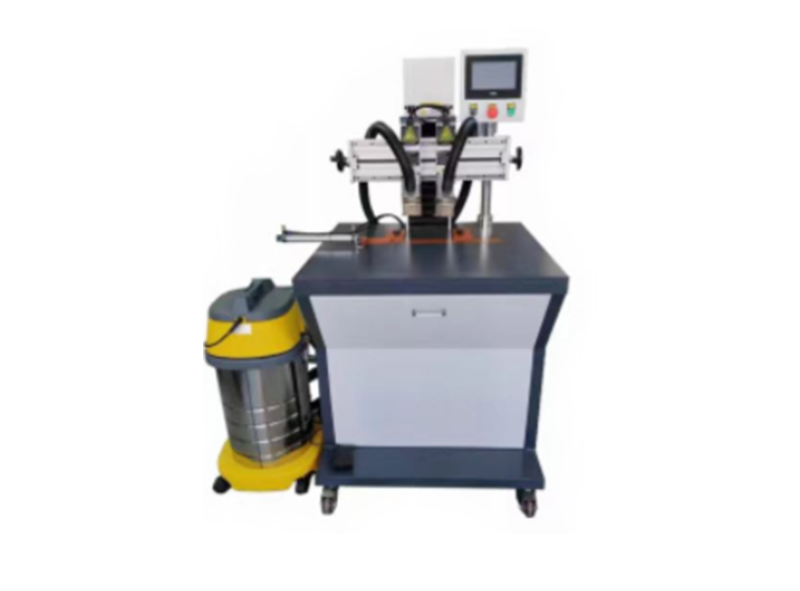
| Tier 1: Artisanal / Startup | < 500,000 Units | Manual / Semi-Automatic | Tooling changeover time (< 30 min) | KBF-420: Offers air pressure bottom molds to avoid bubbles; multi-safe protectors for operator safety . |
| Tier 2: Growing SME | 2M – 5M Units | Automatic (Mid-Range) | Glue tank capacity (>45L) & PLC integration | ZK-3525D: Double-station forming (50 pcs/min); reduces labor by 40% compared to semi-auto . |
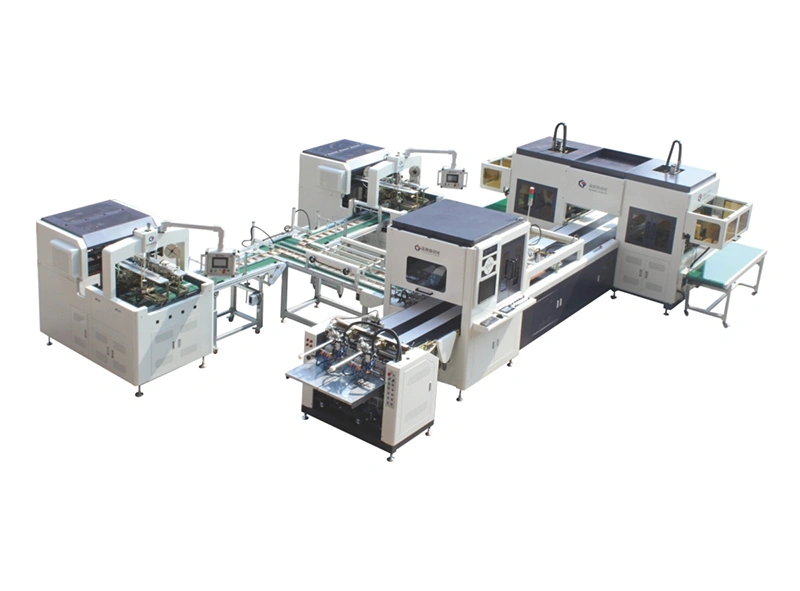
| Tier 3: Enterprise/OEM | 10M+ Units | Fully Automatic Line | Changeover time (<20 min) & IoT readiness | Fully Custom Line: Integrated with auto-stacking and vision systems; 24-hour glue pre-heating controls . |
Case Study: The Changeover Conundrum
A multinational electronics brand based in California faced a massive inefficiency. They were using a dedicated rigid box machine that required 4 hours to change over between the iPhone Pro and iPhone Pro Max boxes. They switched to a modular system featuring quick-release molds and servo-adjustable format changes.
-
The Result: Changeover time dropped from 240 minutes to 18 minutes with one operator .
-
The Lesson: For Tier 2 and 3 buyers, changeover time is often a more valuable metric than max speed. Look for machines advertising format change times under 20 minutes—a standard now set by European manufacturers but increasingly matched by top-tier Asian suppliers .
4. Navigating Risk: Supplier Evaluation and the "Evidence Triangle"
To adhere to EEAT (Experience, Expertise, Authoritativeness, Trustworthiness) standards, you cannot rely on promises. You need the Evidence Triangle: Certification + Comparative Data + User Validation.
1. Certification is Non-Negotiable
-
CE Marking: Mandatory for EU compliance. Verify it covers the entire electrical cabinet, not just the frame.
-
ISO 9001:2015: Ensures the manufacturer has a quality management system.
-
SGS / BV Verification: Third-party audits (like those conducted for Zhongke Precision Machinery) validate that the supplier’s factory floor is actually 5,000 sqm and not just a trading office .
2. Comparative Data: The Price-Performance Curve
Data from verified B2B transactions reveals a clear tiered structure :
-
$5,000 – $15,000: Semi-automatic. Suitable for disposable food containers or simple rigid boxes. Limited to 15–20 pcs/min.
-
$20,000 – $60,000: Entry-level automatic. Often lacks vision systems. Good for mid-volume production (30–40 pcs/min).
-
$80,000 – $180,000: Premium automatic. Includes servo motors, vision positioning, and touch-screen HMIs (Human-Machine Interfaces). Pinchuang and similar tier-1 Chinese brands compete here aggressively against European imports, offering comparable specs (e.g., 50 pcs/min) at a 30% lower price point .
-
$200,000 – $600,000+: Fully integrated lines. Includes automatic material feeding, hot stamping modules, and conveyor integration .
3. User Validation: The Reorder Rate Metric
One of the most overlooked metrics is the supplier’s "reorder rate." On major sourcing platforms, a reorder rate above 50% is a strong indicator of satisfaction.
-
Dongying Besco Machine Tool reports a 75% reorder rate, indicating that buyers of their electrical junction box lines return for additional units .
-
Conversely, a sub-15% rate often signals that the supplier focuses on one-off sales or serves a niche that doesn’t require repeat purchases .
5. Future-Proofing: The Shift to Digital and Sustainability
The "smart factory" is no longer a buzzword. If you are procuring today, you must look at the machine’s digital anatomy.
Industry 4.0 Readiness
Modern rigid box making machines are shifting toward predictive maintenance. Machines equipped with OPC-UA or MTConnect protocols allow your production manager to monitor glue temperature (maintained at optimal viscosity via automatic control systems) and motor load in real-time from a tablet . When evaluating a supplier, ask: “Does the PLC store 300 product formulas with SD card backup?” This feature, standard on models like the HM-350A, drastically reduces setup time for repeat orders .
Sustainability Compliance
The market is moving toward recycled materials. However, recycled greyboard has higher dust content and inconsistent thickness.
-
The Test: A leading Pinchuang engineering team recently ran a trial for a European client using 100% post-consumer recycled board. The standard suction feeders struggled with the dust. By switching to a double-platform non-stop feeding system and upgrading the brush wheels (motor-driven to smooth folds), they maintained 98% efficiency .
-
Energy Consumption: Newer servo-driven lines consume roughly 15–25 kW/hour, compared to older hydraulic systems that could exceed 40 kW/hour. Over a 5-year lifespan, the energy savings alone can offset 10-15% of the initial capital outlay .
6. Practical Implementation: Logistics and Installation
A machine is only as good as its installation. Here is a reality check based on cross-border transaction data:
-
Lead Times: Semi-automatic units can ship in 20–30 days. Fully automatic systems require 45–60 days for assembly, factory testing, and crate packaging. Sea freight from Zhejiang to Los Angeles adds roughly 14–21 days .
-
Hidden Costs: Factor in 8-12% of the machine cost for installation and commissioning. If the supplier does not have a local service partner in your region, budget an additional $5,000–$10,000 for a technician’s travel and accommodation for the commissioning phase .
-
Environmental Requirements: High-precision machines require a controlled environment. The ZK-3525D manual specifies a strict requirement: temperature between 5-25°C and humidity between 50-60%. Ignoring this can void the warranty, as fluctuating humidity affects paper expansion and glue curing times .
Conclusion: Making the Intelligent Investment
The decision to purchase a rigid box making machine is ultimately a decision about your brand’s market positioning. If you are aiming for the artisanal, highly customized niche, a semi-automatic system with quick mold changes offers the flexibility you need. If you are scaling to compete with the mass-market electronics giants, a fully automatic line with vision systems and predictive maintenance is not a luxury—it is a requirement for achieving the margins necessary to survive.
Look for partners who exhibit vertical integration. Whether it is KOLBUS casting its own frames for stability or a specialized manufacturer like Pinchuang offering full assembly of feeders, formers, and packing lines in one facility, the physical integration of the manufacturing process reduces finger-pointing when something goes wrong.
The unboxing experience is the first physical interaction a customer has with your product. Investing in the machine that creates that box is investing in your brand’s first impression. Choose wisely, test rigorously, and negotiate for a service level agreement (SLA) that protects your uptime.